NFC Security & Safety Tags India (2026) — Brands Compared
COMPARISON GUIDE

NFC safety and security tags in India

Six Indian brands sell NFC safety tags. We compared price, features, what the finder sees, and how secure the NFC flow is when someone taps the tag.

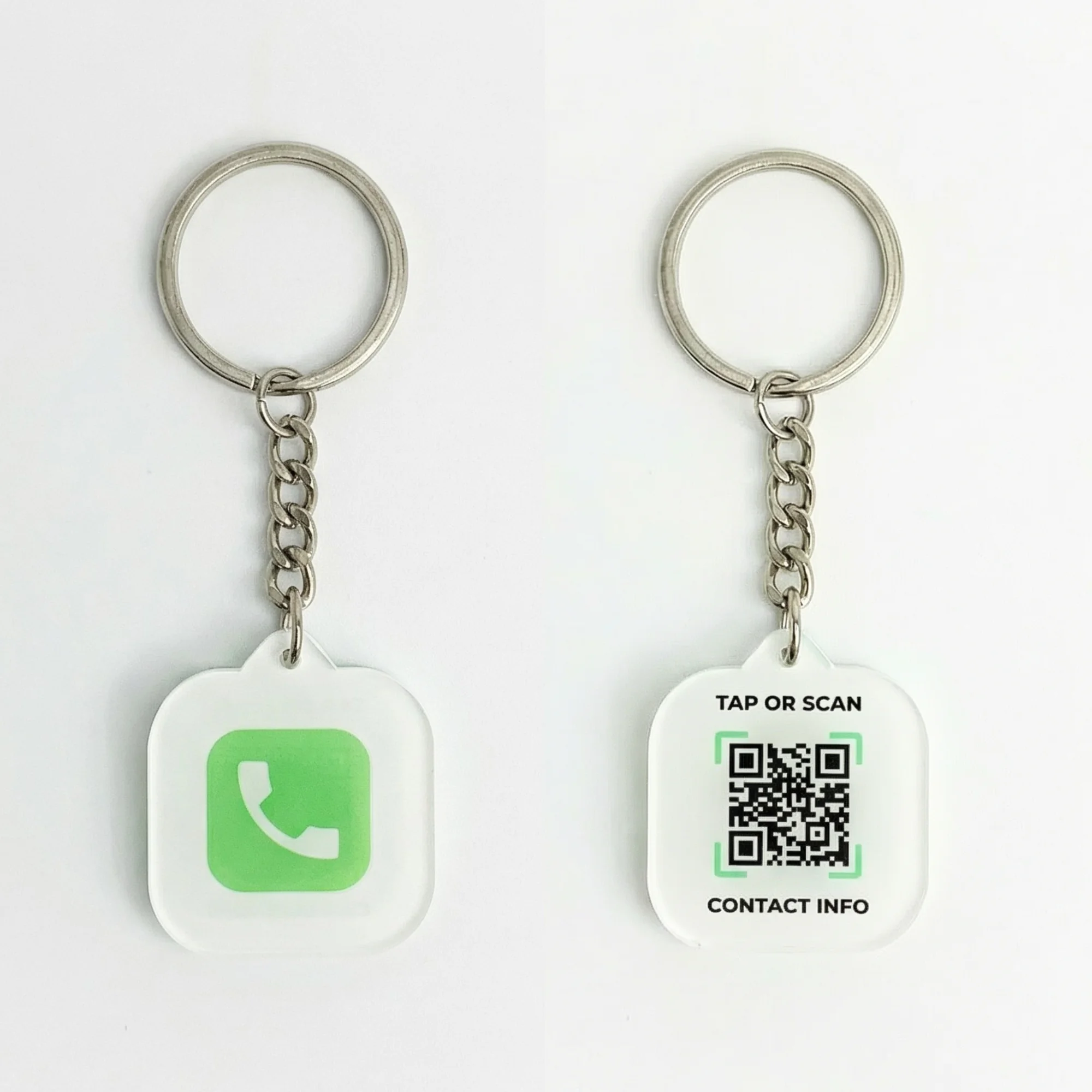
LessWorry NFC + QR safety keychain tag — square model, front and back view
HOW IT WORKS

Three steps. That is all.

The person who finds you does not need to download anything. They tap, they see your info, they call.

1

Tap the NFC chip

Hold any NFC-enabled phone within 2 cm. iPhone 7+ and most modern Android phones work instantly.

2

A page opens

The finder sees your name, phone number, medical info, and a map link. You control what is visible.

3

Finder calls or WhatsApps you

One tap to reach you. You automatically receive their live location on WhatsApp.

WHO NEEDS ONE

People who carry NFC safety tags

These tags are for people, not gadgets. When you cannot speak for yourself, the tag speaks for you.

Elderly parents

Your father will never call you when he is lost. This tag does it for him. Blood group, medications, your number — all visible with one tap.

See parent tags →

Kids

On their school bag or around their neck. If they are separated from you, any adult can tap the tag and reach you in seconds.

See kids tags →

Motorcycle riders

Clipped to your helmet or jacket. If you are in an accident and cannot use your phone, a passerby taps the tag to reach your family.

See rider tags →

People with medical conditions

Diabetes, epilepsy, severe allergies. The tag shows your medical ID to anyone who helps — even if you are unconscious.

Learn more →

Solo travelers

Traveling alone in an unfamiliar city? The tag lets any stranger reach your emergency contact without a language barrier.

See travel tags →

People with dementia

They may not remember their address or your number. But a kind stranger with a phone can tap the tag and bring them home.

Learn more →
BRAND COMPARISON

NFC Safety Tags in India — Compared

We looked at every NFC safety tag brand shipping in India right now. Here is what each one offers.

Feature LessWorry LocoTags tag8 AmILost GetBackLost
Price (single) ₹299 ₹249 ₹349 ~₹400 ₹449 (combo)
Technology NFC + QR NFC NFC + QR NFC + QR + SMS QR only
App needed? No No No No No
Battery? No No No No No
Medical ID Yes Yes No No No
Form factor Keychain tag Various Keychain Keychain Tags + stickers
Finder contacts you via Call + WhatsApp + location Call 6 methods Call + SMS Call
Privacy masking Yes No Yes Yes No

All of these are passive tags — none of them track your location like an AirTag or JioTag Go. They help someone who finds you (or your belongings) contact your family. The right choice depends on what matters most to you: price, medical ID support, or how many ways a finder can reach you. We obviously think LessWorry strikes the best balance, but we have listed the others honestly so you can decide.

HONEST COMPARISON

NFC tags vs Bluetooth trackers

Bluetooth Tracker

Helps you search for it

Shows last known location on a map via other phones running the same network. Requires battery. Works only within ecosystem (Apple, Jio).

NFC Safety Tag

Helps someone return it to you

A finder taps the tag with any phone. Your contact details appear. They call or WhatsApp you with their location. No battery, no ecosystem lock-in.

Best is both together.
Tracker for map-based search. NFC safety tag for human-to-human return.

LessWorry is not a tracker. It is the visible contact layer that bridges finder and owner.

FINDER EXPERIENCE

What the finder sees

Imagine a stranger finds your father confused at a bus stop. They hold their phone near the tag on his keychain. Instantly, a page opens: your name, a Call button, a WhatsApp button, his blood group, his medications. One tap to reach you, and the finder's location is shared automatically.

No sign-up. No app download. Works on any phone. The page loads in under 2 seconds.

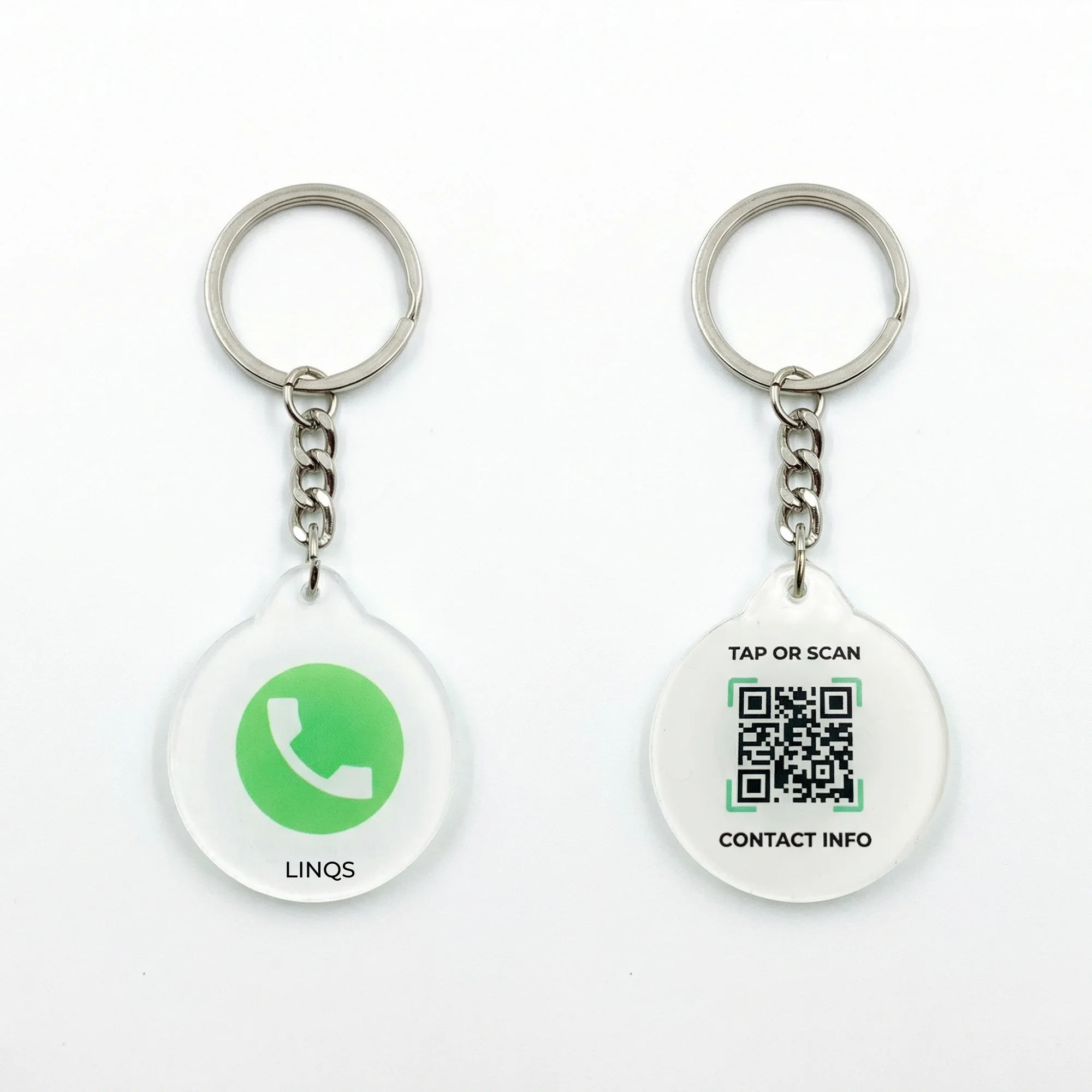
LessWorry round NFC safety tag — the tag a finder would tap
NFC TECHNOLOGY

How NFC works inside a safety tag

What NFC is

NFC stands for Near Field Communication. It is a short-range wireless protocol that operates at 13.56 MHz, governed by the ISO 14443 and ISO 18092 standards. NFC evolved from RFID (Radio Frequency Identification) technology that has been used in access cards, transit passes, and inventory tracking for decades. The key difference is range. RFID can work at distances of several meters. NFC is intentionally limited to approximately 2 to 3 centimeters. This short range is a design choice, not a limitation. It means that NFC communication requires deliberate physical proximity, which makes it inherently more private and secure than longer-range wireless protocols like Bluetooth or Wi-Fi.

How passive NFC tags work

A passive NFC tag has no battery. It contains a small copper or aluminium antenna coil and a microchip. When an NFC-enabled phone is brought within range, the phone emits a radio frequency field at 13.56 MHz. This field induces a tiny electrical current in the tag's antenna coil through electromagnetic induction, the same principle that makes wireless phone chargers work. That induced current is enough to power the microchip and transmit a small amount of data back to the phone. In the case of a safety tag, the data transmitted is a URL. The phone reads this URL and opens it in the default browser. The entire exchange happens in under 100 milliseconds. Because the tag draws its power entirely from the reader's RF field, it never needs charging and has no expiration date. A passive NFC tag manufactured today will still work in ten or twenty years, assuming the physical tag is not damaged.

Range, security, and reliability

The 2 to 3 centimeter operating range of NFC is its primary security feature. Unlike Bluetooth, which can be intercepted at 10 meters or more, NFC requires the reader to be physically touching or nearly touching the tag. This makes remote eavesdropping or unauthorized reading practically impossible in normal use. For a safety tag, this means that only someone who is physically holding your tag can read it. A passerby walking past your bag will not accidentally trigger the tag. The NFC communication is also directional and one-to-one, meaning the tag responds only to the specific device that is powering it at that moment. There is no broadcast signal to intercept.

For safety and security use cases, the important detail is what the tag stores. A LessWorry NFC tag stores a URL, not your full medical or contact profile. The phone opens that URL in a browser, and the owner controls what information is shown there. This is safer than writing private details directly into the NFC chip, because the visible information can be edited, limited, or deactivated later without replacing the physical tag.

The NTAG213 chip

LessWorry NFC safety tags use the NXP NTAG213 chip, one of the most widely deployed NFC tag ICs in the world. The NTAG213 provides 180 bytes of user-programmable memory, which is enough to store a URL of up to approximately 132 characters after the NDEF (NFC Data Exchange Format) header is accounted for. The chip supports a data transfer rate of 106 kbit/s and is rated for a minimum of 100,000 write cycles and unlimited read cycles. Each NTAG213 chip has a factory-programmed unique 7-byte serial number (UID), which means no two tags are identical. The chip also supports password-based access protection, allowing the tag owner to lock the stored URL against unauthorized modification. The operating temperature range is minus 25 to plus 85 degrees Celsius, covering every climate condition in India from Ladakh to Chennai.

Why NFC and QR together is better

LessWorry tags include both an NFC chip and a printed QR code on the same tag. This dual-interface design is intentional. NFC is faster: the finder holds their phone near the tag and the contact page opens immediately without launching a camera app. However, not every phone has NFC. While iPhone 7 and later models all support background NFC tag reading, and most Android phones manufactured after 2018 include NFC hardware, there are still budget Android phones sold in India that lack NFC capability. The printed QR code serves as a universal fallback. Any phone with a camera, including phones from 2015 or earlier, can scan a QR code. Together, NFC and QR ensure that 100 percent of smartphone users can reach the tag owner. NFC handles the majority of scans with a seamless tap experience, while QR covers the remaining edge cases with a scan-and-open flow that takes only a few seconds longer.

PRICING

LessWorry NFC Safety Tag

₹299

Starts at ₹299 for a single tag. Packs available. Free shipping across India.

Buy LessWorry
FREQUENTLY ASKED

Common questions about NFC safety tags

An NFC safety tag is a small passive chip embedded in a keychain or sticker. When someone taps it with their phone, a page opens showing emergency contacts, medical information, and a button to call or WhatsApp the owner. No app is needed — the tag is powered wirelessly by the phone that taps it.
NFC (Near Field Communication) uses a 13.56 MHz radio signal. When a phone is held within 2-3 cm of the tag, the phone powers the chip wirelessly and reads a URL. The phone opens a browser page with the owner's emergency contact details. No battery, no pairing, no app download needed.
iPhone 7 and later read NFC tags natively. Most Android phones manufactured after 2018 support NFC. For phones without NFC, LessWorry also includes a printed QR code that any phone camera can scan.
No. NFC tags do not track location or emit a signal. They are passive — they only work when someone physically taps the tag with their phone. A GPS tracker shows location on a map. An NFC safety tag helps someone who finds you or your item contact your family immediately. Best setup: tracker inside, NFC safety tag outside.
Yes, when designed correctly. NFC works only at very short range, usually 2 to 3 centimeters, and the LessWorry tag stores only a URL on the chip. Personal details stay on the server, can be edited by the owner, and are protected through OTP verification. The tag is meant to be read by a person physically holding it, not by someone far away.
LessWorry starts at ₹299 for a single tag. Duo packs (2 tags) cost ₹558 and Family Packs (4 tags) cost ₹1,036. Free shipping across India, no subscription.
Yes. You can add blood group, allergies, conditions, medications, and emergency contacts. The information is controlled by you — edit anytime via OTP verification. Only what you choose to show is visible to the person who scans.

Tag it before you need it

An NFC safety tag costs less than a single meal out. Attach one to your keys today.

Explore other use cases

NFC Tag — ₹299
Buy Now